
WORK
Our portfolio
Every image is captured from the actual project, not from a mockup.
7 projects / 7 total
01 / Clothing brand website
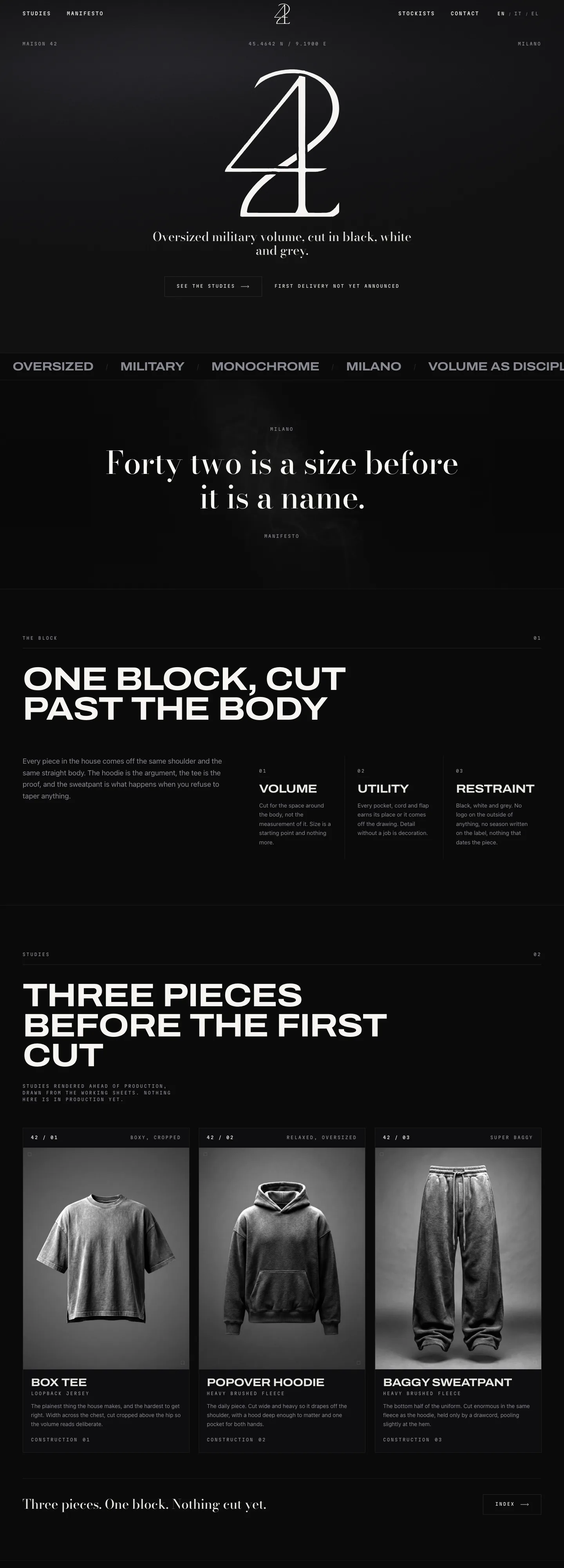

NOTTE 42
The challenge
A trilingual website for a clothing brand, with a three dimensional cloth study on the home page and each garment drawn as a vector technical flat. The challenge was keeping the motion stable on a phone without losing the feel of the fabric.
02 / Yachts and interiors website
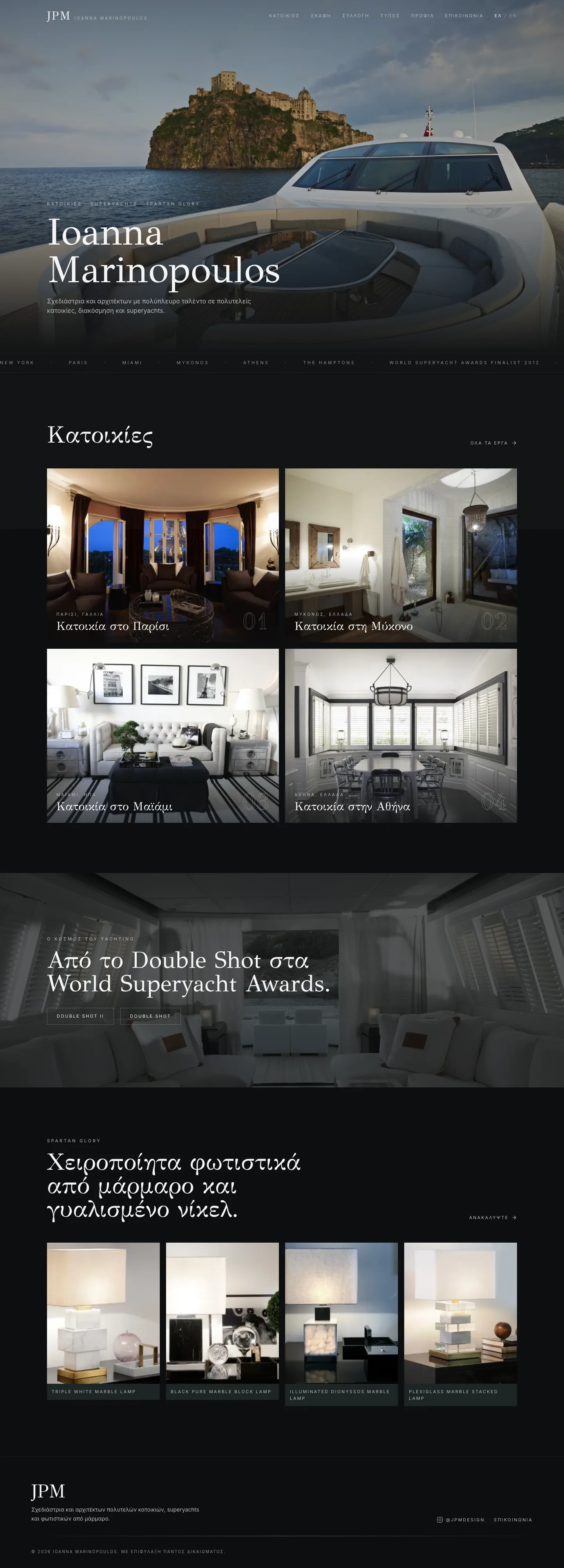

JPM
The challenge
A bilingual website with two separate catalogues, yachts and interiors, sharing a single design language. The challenge was the large format photography: it has to look right and load quickly, two requirements that pull in opposite directions.
03 / Restaurant website
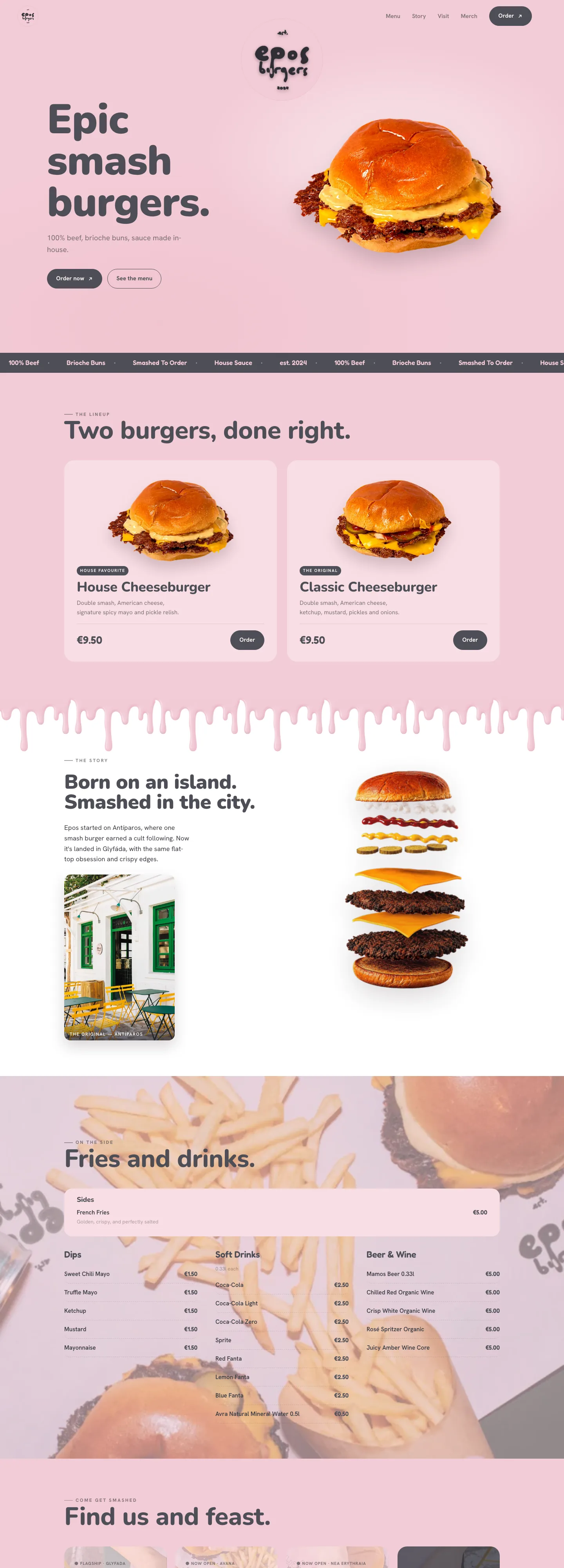

EPOS BURGER
The challenge
A single page website for a Greek smash burger brand, with the burgers cut out of their background and moving with the scroll, and one six layer burger that assembles as the visitor scrolls down. The challenge was the layers: six images on one shared canvas that have to stay aligned at every screen width.
04 / Restaurant website
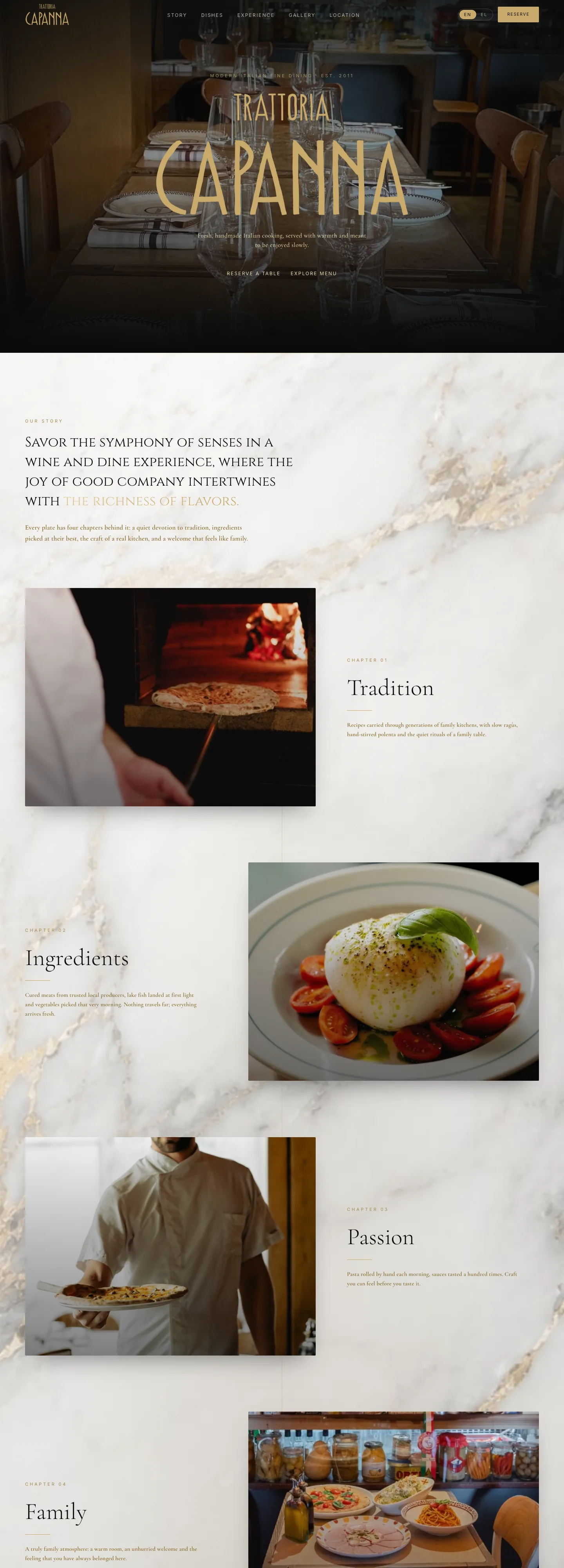

TRATTORIA CAPANNA
The challenge
A website for an Italian restaurant in Athens, with the menu, reservations and the map. The challenge was that the page arrived as a finished static export: every change to the text, the images and the map had to be made inside minified files, without breaking anything and with the page ultimately loading faster than before.
05 / Drinks brand website
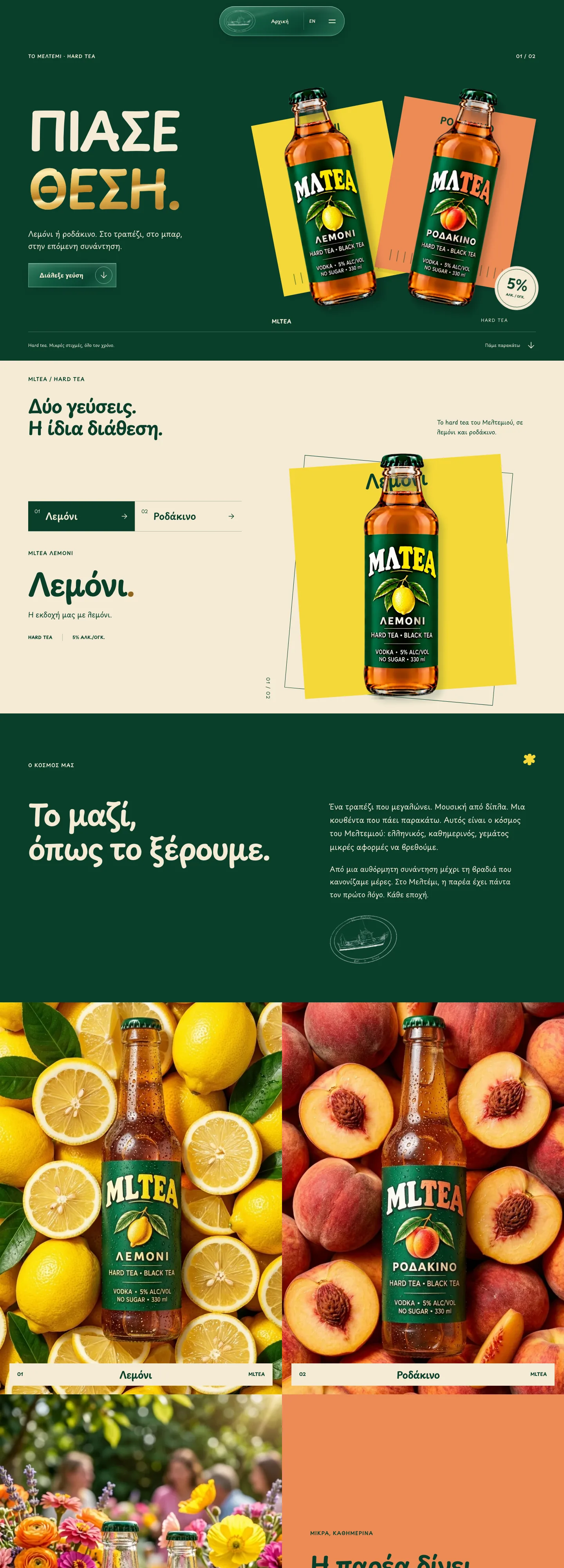

DRINK MLT
The challenge
A bilingual website for Meltémi, with animated bottles, a flavour selector and product films. The challenge was keeping the labels clear and the motion stable on phones.
Visit DRINK MLT06 / Personal training app
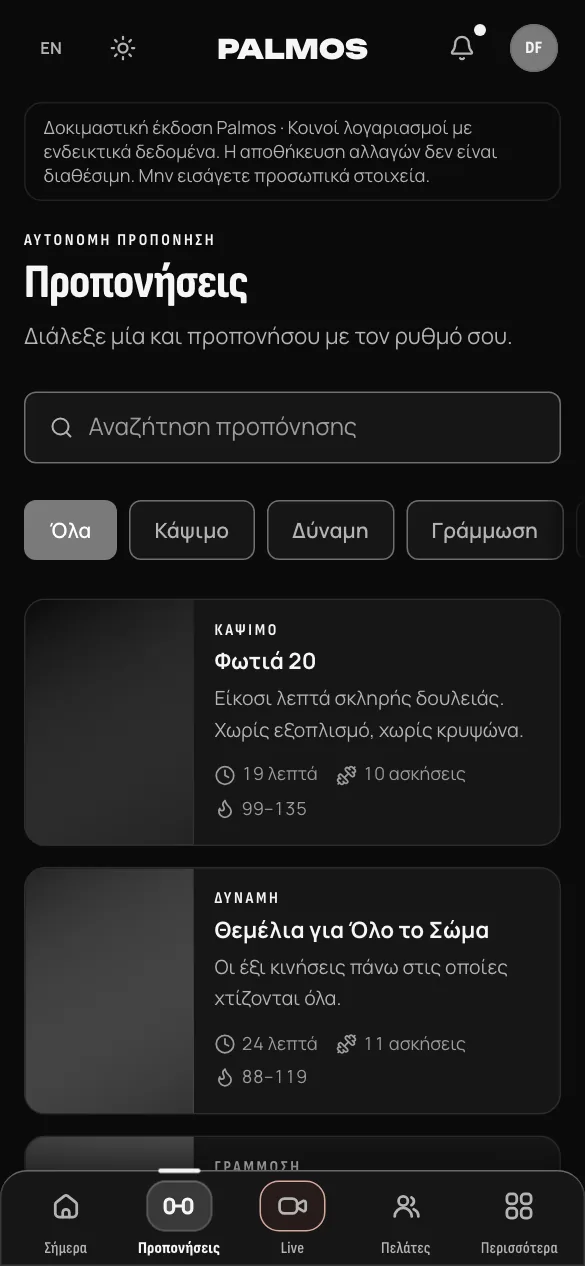
PALMOS
The challenge
A bilingual personal training app with separate coach and client views, a lesson calendar and a workout library. The challenge was organising these flows into a clear mobile experience. Available as a demo.
Visit PALMOS07 / Consent based face recognition
AEGIS
The challenge
A face recognition system that operates only with explicit consent. The challenge was not the model but its fairness: a system that performs well on average can perform poorly for one particular group of people, and that has to be measured.